
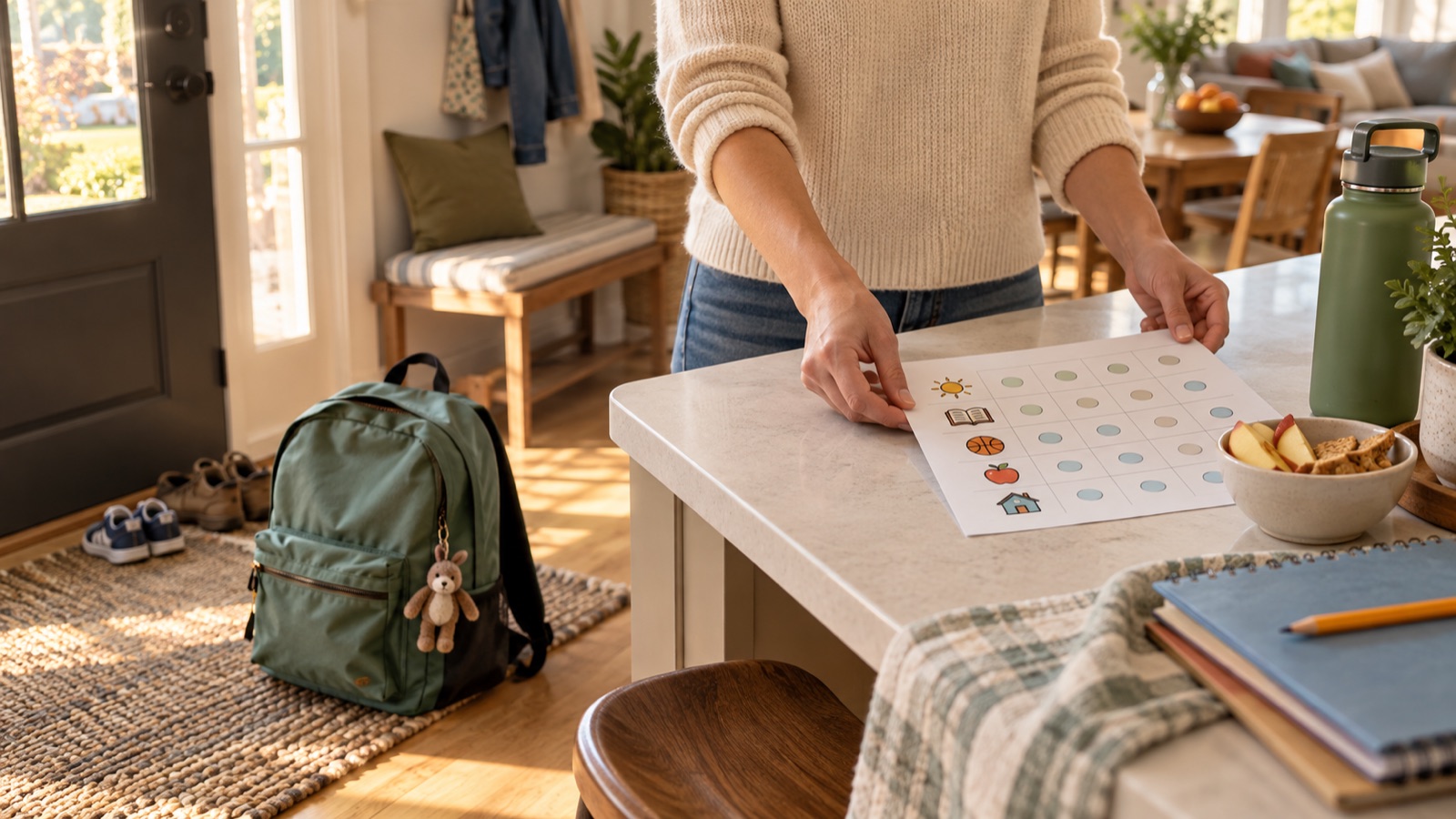
If your child looks fine at school but melts down after they get home, it can feel confusing and personal.
The teacher says the day was fine. Your child walks in the door, drops the backpack, and then the smallest request turns into tears, yelling, shutdown, or a battle over homework.
Before you decide your child is being lazy, defiant, dramatic, or only giving you the worst version of themselves, slow the moment down.
Start with the first 20 minutes after school.
That small window can show whether your child is coming home hungry, thirsty, exhausted, overstimulated, rushed into another demand, or still carrying the noise and pressure of the school day. It does not give you a diagnosis. It gives you a pattern to measure instead of another reason to blame yourself or your child.
The after-school crash is often a pattern
Some kids work hard all day to sit still, follow directions, handle noise, manage social pressure, keep their body calm, and hold big feelings inside. By the time they get home, there may not be much regulation left.
That does not make the meltdown okay or easy. It means behavior alone may not tell the whole story.
Public parent-education sources often describe this after-school crash as a common pattern for children who have spent the day holding it together, especially kids who already have self-regulation challenges. Understood calls this “restraint collapse” and notes that the home environment can be where kids finally release the feelings they held in during the day. The practical takeaway for parents is not to ignore the behavior. It is to observe what happened before it.
That matches what many Omaha parents tell us at Radiant Life Omaha. The child is not always trying to make home harder. Sometimes home is the first place their body finally says, “I am done.”
What to track in the first 20 minutes
For the next seven school days, track what happens from the moment your child gets in the car or walks through the door until about 20 minutes after arrival.

1. Food, water, and rest
Was your child hungry, thirsty, tired, or coming off a long stretch without a real break? A snack and quiet transition will not solve every pattern, but they can reveal whether the body was already running on empty.
2. Sensory load
Notice noise, lights, clothing, shoes, the car ride, backpack weight, crowded hallways, screen transitions, and sibling noise. A child may tolerate sensory input all day, then lose capacity when one more sound or demand lands at home.
3. Transition speed
How fast did the next demand arrive? Homework, chores, sports gear, dinner, practice, or “tell me about your day” can all feel reasonable to a parent and still be too fast for an overloaded child.
4. Connection before correction
Some children need a few minutes of quiet connection before they can answer questions or follow directions. Try a simple rhythm: food, water, quiet, connection, then the next small step.
5. Recovery time
How long does it take your child to settle once the crash starts? Five minutes, 30 minutes, the rest of the night? Recovery time can tell you whether the issue is a small transition bump or a bigger nervous-system stress pattern.
Why this is not just an ADHD question
When after-school meltdowns repeat, parents often wonder whether it is ADHD, anxiety, sensory overload, defiance, sleep, school stress, or something else.
That question matters, but guessing from behavior alone is risky. The CDC explains that ADHD diagnosis is a multi-step process and that sleep problems, anxiety, depression, and learning differences can have symptoms that look similar to ADHD. The CDC also notes that strong support plans often involve parents, healthcare providers, teachers, and school supports working together.
A 2025 systematic review on emotional dysregulation in youth also points to a broad picture. Sensory sensitivity, attention, threat processing, reward expectancy, response control, family interactions, and other factors can all be part of why a child struggles to regulate. That is why the first goal is not to label the child from one hard afternoon. The first goal is to understand the repeating pattern.
What Radiant Life Omaha measures
Radiant Life Omaha believes God made the body to work properly and to know peace and joy. When a child is overwhelmed, our first move is not shame. It is curiosity.
During a consultation, we listen to the parent story, look for patterns in daily life, and use objective scanning to help parents understand how the child’s system may be handling stress. We help parents measure instead of guess, identify sensory and nervous-system stress patterns, help calm the sensory system and brain, and track whether daily life is improving over time.
Radiant Life Omaha does not diagnose or treat ADHD, anxiety, autism, sensory processing disorder, or mental-health conditions. Pediatricians, therapists, schools, medication decisions, and mental-health supports can all be important parts of a child’s care. Our lane is helping families get clarity about the brain-body and sensory patterns that may be part of the puzzle, then giving parents a clear next step.
A simple seven-day after-school overload map
Use this quick note after school for seven days:
- What happened in the first 20 minutes after school?
- Did my child need food, water, quiet, movement, or connection?
- What sensory input stacked up today?
- How fast did the next demand arrive?
- How long did recovery take?
- What helped even a little?
Then look for what repeats. If the same pattern keeps showing up, if the meltdowns are getting stronger, or if school, sleep, safety, or family life are being affected, it is time to get more clarity.
You do not have to keep walking on eggshells. You do not have to decide whether your child is “just being difficult” from the hardest moment of the day. You can measure the pattern and get a next step.
If this sounds like your home, call Radiant Life Omaha and ask whether a consultation is the right next step. You will leave the consultation with useful answers and clear next steps, or the consultation fee is refunded. Amount and timing of improvement vary and cannot be guaranteed.
Frequently asked questions
Why does my child melt down after school but behave at school?
Some children use a lot of capacity to manage school demands, social pressure, noise, transitions, attention, and self-control. Home may be where the overload finally shows. Track the first 20 minutes after school before assuming the behavior is intentional.
Can sensory overload look like defiance?
It can. A child who is overwhelmed may refuse, run away, yell, cry, or shut down. That does not mean every hard behavior is sensory overload, but it does mean parents should look for sensory and nervous-system patterns before jumping straight to blame.
What should I track before guessing ADHD or anxiety?
Track food and rest, sensory input, transition speed, the first demand after school, recovery time, sleep, and what helped. If the same pattern repeats, bring those observations to a trusted provider.
Does Radiant Life Omaha diagnose ADHD or anxiety?
No. Radiant Life Omaha does not diagnose or treat ADHD, anxiety, autism, sensory processing disorder, or mental-health conditions. We help parents measure brain-body and sensory stress patterns and understand useful next steps.
When should I call Radiant Life Omaha?
Call when the pattern keeps repeating, family life feels like walking on eggshells, recovery takes a long time, school or sleep is being affected, or you want objective clarity instead of another round of guessing.
Related Radiant Life Omaha guides
- After-School Meltdowns in Omaha Kids
- Good at School, Meltdown at Home?
- Homework Refusal: Why the Battle Starts Before the Pencil Hits Paper
- ADHD or Sensory Overload?
