
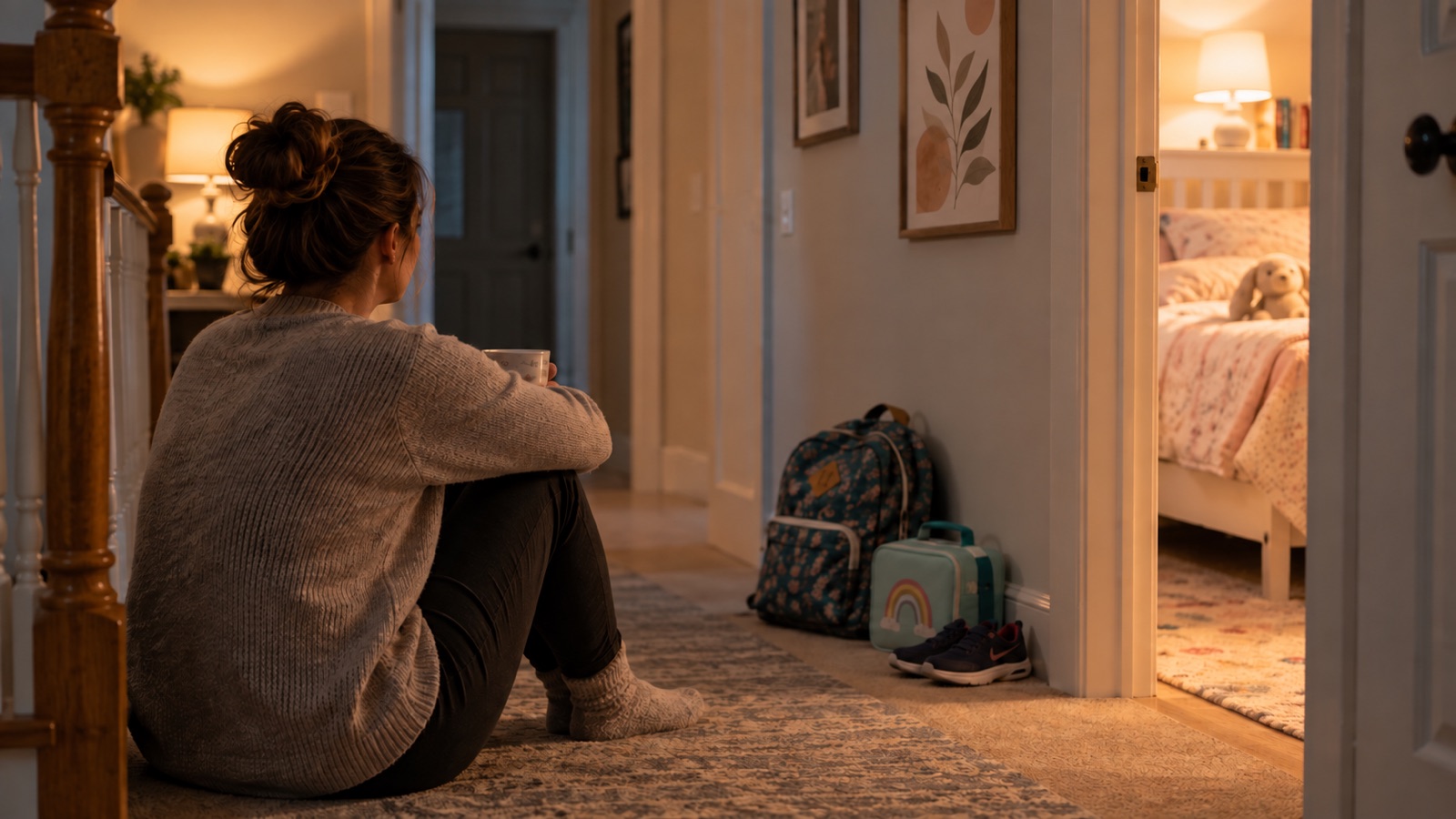
It is 8:43 PM.
Pajamas turned into arguing. Teeth turned into tears. Lights out turned into bargaining, anger, or a full shutdown.
You are exhausted because the school day is over, dinner is over, homework is over, and somehow bedtime is where the whole day finally falls apart.
If that sounds familiar, bedtime may not be the real beginning of the meltdown.
The better question may be, “What filled the cup all day before bedtime asked for one more thing?”
If you want help sorting that out now, call Radiant Life Omaha at (402) 915-0846. Our knowledgeable, compassionate team is ready to listen, answer your questions, and help you understand the next step.
If you are not ready to call, use the five-night tracker below. If the pattern is unclear, unmanageable, not improving, or already overwhelming your home, call us.
Radiant Life Omaha can help assess sensory and nervous-system stress patterns and give parents a measured next step. We do not diagnose, treat, cure, or guarantee changes in ADHD, anxiety, sleep, meltdowns, or school behavior.
The bedtime moment parents recognize
Some kids look fine through most of the school day. Then the evening routine asks for one more transition, one more sound, one more clothing change, one more instruction, one more separation, one more “time to stop.”
That is when parents see the crash.
It may look like anger. It may look like defiance. It may look like panic, tears, silliness, refusal, or a child who suddenly cannot do the simple thing they did last week.
That does not mean your child is bad. It does not mean your home is the problem. It means the pattern is worth understanding.
Why bedtime may be the final drop
A demanding school day can ask a child to manage noise, transitions, social pressure, sitting still, focus, hunger, homework, after-school activities, sibling conflict, screens, and tiredness.
For a child whose system is already close to capacity, bedtime can become the final drop.
Sleep experts consistently emphasize predictable bedtime routines and enough sleep for children. The American Academy of Pediatrics gives age-based sleep guidance for kids and teens, and the Sleep Foundation explains that consistent routines can help children transition toward sleep. The CDC also notes that ADHD symptoms can create difficulty at home, school, or with friends.
That public guidance does not prove the cause of one child’s bedtime meltdown. It does support the practical starting point: look at the whole pattern, not only the last five minutes.
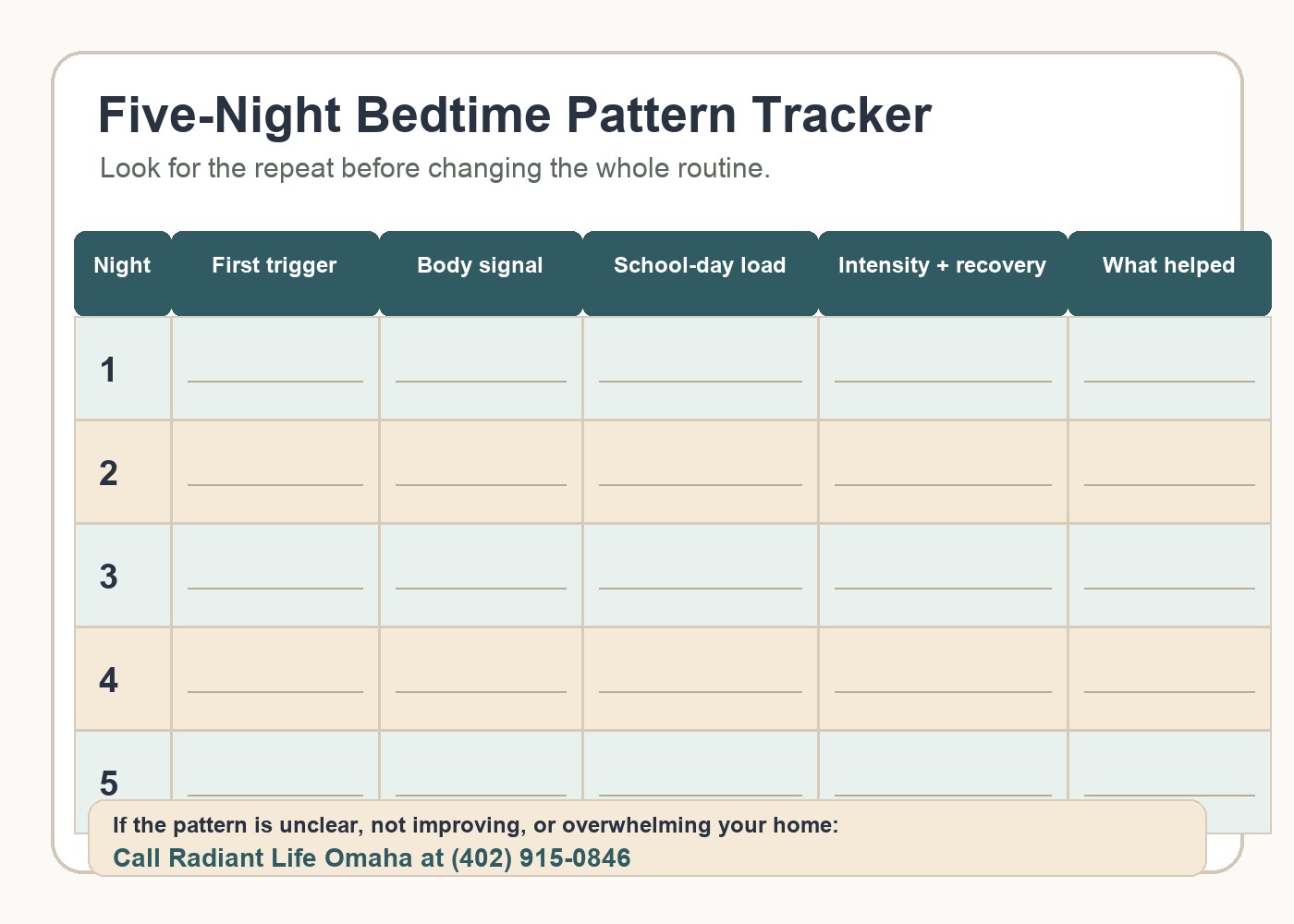
Track five nights before you decide the next step
The goal is not to build a perfect spreadsheet. The goal is to stop treating every bedtime like a brand-new mystery.
For five nights, write down:
- The first trigger: What happened right before the mood shifted?
- The body signal: Did your child look wired, limp, hungry, hot, sensitive to clothing, sensitive to noise, or unable to settle?
- The school-day load: Was the day loud, socially hard, homework-heavy, schedule-heavy, or activity-heavy?
- The intensity and recovery: How big did it get, and how long did it take to calm?
- What helped: What made the evening even a little easier?
Then look for the repeat.
Does bedtime fall apart after late sports nights? After homework battles? After screen time? After noisy afternoons? After a week of poor sleep? When there is a clothing demand, toothbrushing demand, sibling conflict, or sudden change?
Once you see one likely pattern, change one thing at a time. Try a shorter routine, fewer verbal reminders, earlier pajamas, lower light, a visual checklist, a snack, a calmer homework finish, or a buffer between screens and bed.
One change at a time helps you learn. Ten changes at once only creates a new mystery.
When the tracker means it is time to call
Call Radiant Life Omaha if:
- You see the pattern but do not know what to do with it.
- The bedtime meltdowns keep happening even after simple routine changes.
- Your child seems overwhelmed by ordinary evening demands.
- The pattern is affecting sleep, school mornings, sibling relationships, or family peace.
- You are already exhausted and need help sorting the next step.
Bring the tracker if you have it. Call even if you do not.
At Radiant Life Omaha, we look for sensory and nervous-system stress patterns that can make normal daily demands feel much bigger to a child. We measure, listen, explain what we find, and help parents move from guessing to direction.
The approach may be used on its own or alongside medication, therapy, school services, and other resources. If another professional should be involved first or alongside us, we will help you see that clearly.
What Radiant Life Omaha helps parents understand
Many parents have already tried being consistent, being softer, being firmer, removing screens, changing snacks, changing rewards, and reading every bedtime tip they can find.
They do not need one more person to make them feel like they are failing.
They need someone to ask better questions:
- Is this child entering bedtime already overloaded?
- Is the evening routine too many transitions too late in the day?
- Is sensory stress showing up through clothing, sound, movement, light, or body signals?
- Is recovery taking longer than it should?
- Is the same pattern showing up at school, after school, and bedtime in different ways?
Radiant Life Omaha is built for that kind of measured next step. We help parents understand what may be happening beneath the behavior, where the family can start, and whether Radiant Life is the right next step.
When to involve medical, school, or urgent support
Call your child’s pediatrician or another appropriate professional promptly if your child has major sleep changes, new physical symptoms, breathing concerns during sleep, panic symptoms, medication changes, signs of bullying, repeated school refusal, severe aggression, or a quick decline.
If your child might hurt themselves, hurt someone else, run away, or cannot be kept safe, call 911 for immediate danger. For suicide or mental-health crisis support in the United States, call or text 988.
Radiant Life Omaha does not replace emergency care, medical advice, therapy, school support, or another professional responsible for a specific concern.
A clear next step tonight
If bedtime keeps turning into tears, anger, bargaining, or shutdown after a long school day, start by tracking five nights.
If you want help now, call Radiant Life Omaha at (402) 915-0846. Our team will listen, answer your questions, and help you understand whether Radiant Life is the right next step for your family.
In the paid consultation, your family receives useful answers and clear next steps, or the consultation fee is refunded. That is a promise of clarity and direction. It is not a promise of diagnosis, acceptance into care, symptom change, or a particular clinical result.
Frequently asked questions
Why does my child melt down at bedtime?
There may be several reasons, including fatigue, transitions, anxiety, sensory overload, hunger, screens, schedule pressure, sleep problems, or a nervous system already close to capacity. Track the whole evening pattern instead of only the final demand.
Can the school day affect bedtime?
Yes. A child may spend the day managing noise, focus, social pressure, transitions, and expectations, then run out of capacity when the evening asks for one more transition. That does not diagnose the cause, but it is useful data.
What should I track before calling Radiant Life Omaha?
Track the first trigger, body signals, school-day load, intensity, recovery time, and what helped for five nights. You can also call without notes if the pattern is already overwhelming.
Should I call Radiant Life Omaha or keep trying bedtime tips?
Call Radiant Life Omaha if the pattern is unclear, unmanageable, not improving, or already affecting sleep, school mornings, sibling relationships, or family peace. Bedtime tips can help, but repeating overwhelm deserves a measured next step.
What does Radiant Life Omaha assess?
Radiant Life Omaha assesses sensory and nervous-system stress patterns, including transition load, recovery, regulation, and whether a child’s system appears close to capacity. We do not diagnose ADHD, anxiety, sleep disorders, or school-refusal conditions.
Can Radiant Life work alongside medication, therapy, or school services?
Yes. Radiant Life may be used on its own or alongside medication, therapy, school services, and other support. We help parents understand what we can measure and where another professional or resource should be involved.
Sources
- American Academy of Pediatrics, HealthyChildren.org: Healthy Sleep Habits: How Many Hours Does Your Child Need?
- Sleep Foundation: Bedtime Routines for Children
- Centers for Disease Control and Prevention: ADHD Signs and Symptoms
Related Radiant Life Omaha guides: Good at School, Meltdown at Home?, Homework Refusal, ADHD or Sensory Overload?, and Sensory System Answers.
